

When planning an event or managing a work site, safety and organization are paramount. Two common tools for achieving this are barriers and barricades. While many people use the terms interchangeably, they refer to distinct types of equipment with specific purposes.
Understanding the difference between crowd control barriers and traffic barricades is essential to ensuring you select the right tool for your project and maximize both safety and efficiency.
We will explore each option’s unique design, intended applications, and specific benefits. By the end of this blog, you will have a clear understanding of when to use a crowd control barrier and when a traffic barricade is the appropriate choice, enabling you to make informed decisions for your next event or construction project.
What Are Crowd Control Barriers?
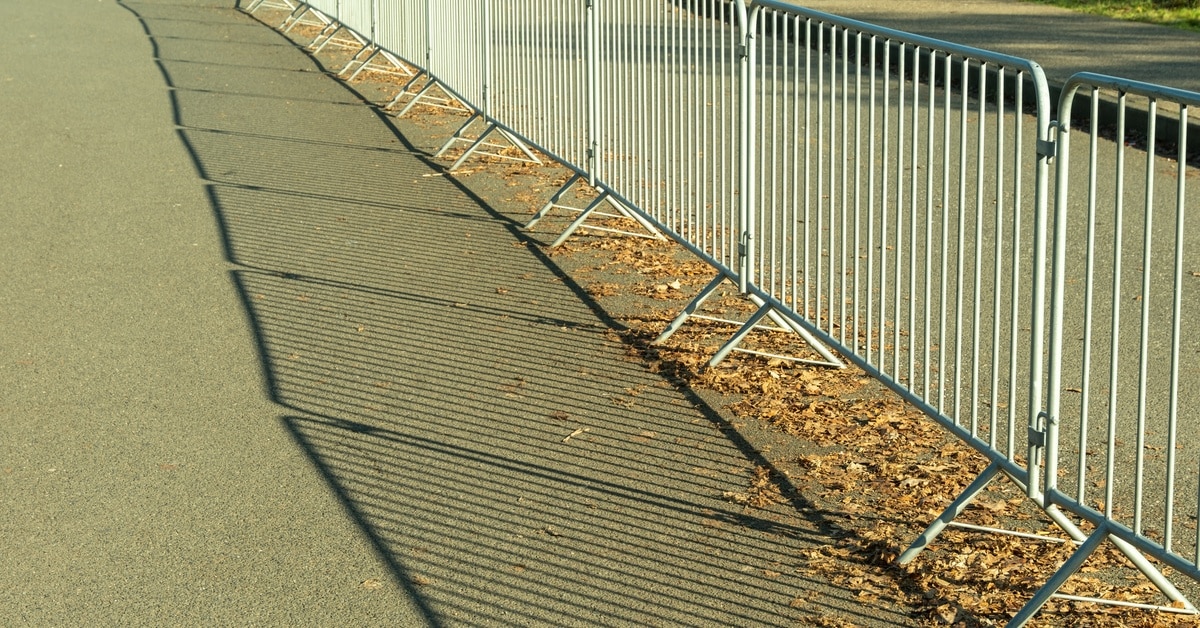
Crowd control barriers, often called pedestrian barriers or bike rack barriers, specifically work to manage and guide foot traffic. They are typically lightweight, interlocking steel panels that create continuous, stable lines to direct people in an orderly fashion.
Their primary function is to create clear pathways, designate restricted areas, and prevent overcrowding at public gatherings. You will commonly see them at concerts, festivals, parades, and sporting events, as well as in any location where you have to manage large groups of people safely.
Key Features of Crowd Control Barriers
- Interlocking design: The most significant feature of crowd control barriers is their ability to connect. Each panel has hooks on one end and loops on the other, allowing you to link them together to form a long, continuous wall. This prevents gaps and ensures the line remains intact even under pressure from a crowd.
- Lightweight and portable: Constructed from galvanized steel, these barriers are light enough for two people to move and set up quickly without specialized equipment. This portability is crucial for temporary events that require rapid deployment and removal.
- Stable feet: Crowd control barriers come with different types of feet, most commonly flat feet or bridge feet. Flat feet are ideal for smooth surfaces like pavement, as they minimize tripping hazards. Bridge feet provide extra stability on uneven ground, such as grass or dirt, by improving weight distribution.
- Visibility: While their main purpose is physical guidance, their presence alone serves as a clear visual cue, informing pedestrians where they should and should not go.
Common Uses for Crowd Control Barriers
- Queue management: Creating orderly lines for ticketing, entry points, or concessions
- Perimeter security: Establishing a secure boundary around an event space or a specific zone, like a VIP area or beer garden
- Directing foot traffic: Guiding attendees along designated routes, such as from a parking area to an entrance or between different stages at a festival
- Restricting access: Blocking off sensitive areas like backstage, equipment storage, or staff-only zones
What Are Traffic Barricades?
Traffic barricades, on the other hand, control, stop, or divert vehicular traffic. Their design prioritizes high visibility and impact resistance to ensure drivers can see them and manage the flow of cars, trucks, and other vehicles.
These barricades are a staple at construction sites, road closures, accident scenes, and utility work zones. The Federal Highway Administration (FHWA) regulates the standards to ensure they meet specific requirements for color, size, and reflectivity.
Key Features of Traffic Barricades
- High visibility: You can see traffic barricades during the day or at night. They typically feature brightly colored panels (usually orange or white) with reflective sheeting, making them highly visible when struck by headlights. This is a critical safety feature for roadway applications.
- Variety of types: There are several types of traffic barricades, each suited for different situations.
- Type I and Type II barricades: These are the familiar “sawhorse” style barricades. Type I has one reflective rail, and you can use them for well-defined work areas on local roads, while Type II has two reflective rails for increased visibility on expressways and highways.
- Type III barricades: These are larger, more substantial barricades with three reflective rails. They are used for full road closures and are designed to serve as a significant visual obstacle, alerting drivers to a complete stop or a detour ahead.
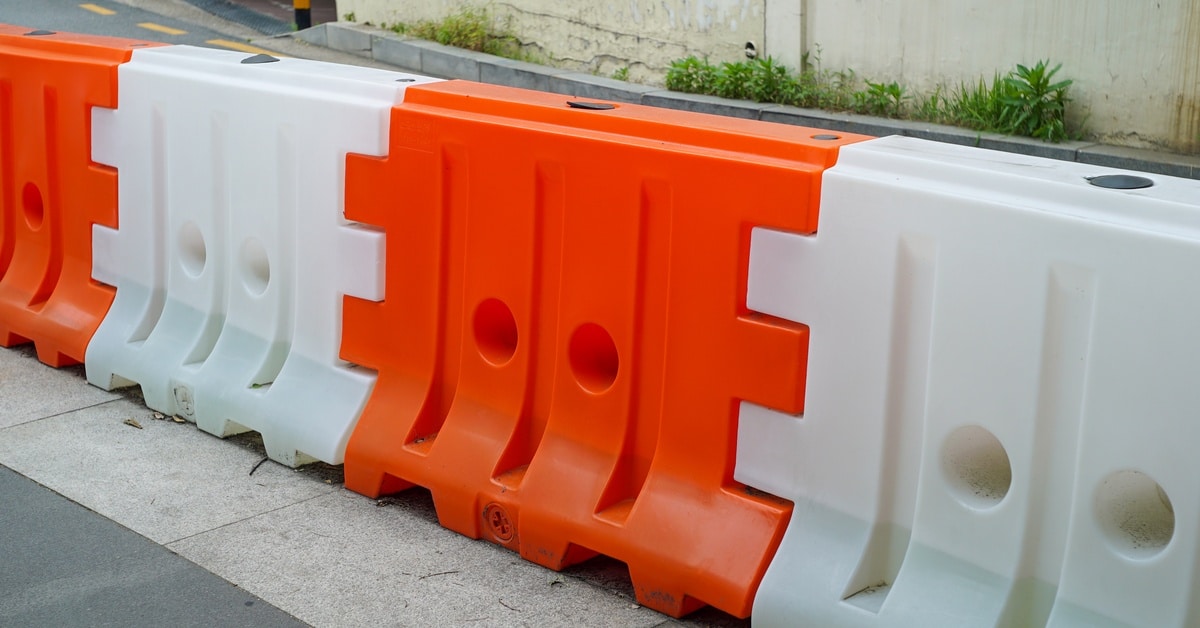
- Water-filled barriers: These are heavy-duty plastic barriers that are filled with water or sand on-site. They form a robust, continuous wall that can absorb impact, and you can use them for long-term projects or to create strong perimeters along highways.
- Durability and weight: While some traffic barricades (like Type I and II) are relatively lightweight for easy deployment, others (like water-filled barriers) are designed to be extremely heavy and stationary once in place. Users choose the construction materials, from sturdy plastic to reinforced steel, for their ability to withstand weather and potential impacts.
Common Uses for Traffic Barricades
- Road closures and detours: Completely blocking a road or directing traffic along an alternate route during construction, accidents, or public events like marathons
- Lane channeling: Guiding vehicles into specific lanes to navigate around a work zone safely
- Work zone protection: Creating a safe buffer zone between workers and moving traffic on construction sites
- Parking lot management: Directing the flow of traffic in and out of parking lots or blocking off specific sections
Making the Right Choice for Your Project
Choosing between crowd control barriers and traffic barricades comes down to answering one simple question: Are you managing people or vehicles?
If your primary goal is to guide pedestrians, create queues, or secure a perimeter at an event, crowd control barriers are the correct and most effective solution. Their interlocking, lightweight design is perfect for managing foot traffic safely and efficiently. Using traffic barricades in this context would be cumbersome and could create unnecessary trip hazards.
If you need to direct, slow, or stop vehicular traffic, traffic barricades are the only safe and compliant option. Their high-visibility features and durable construction are specifically designed to communicate with drivers and protect both workers and the public on or near roadways. Using crowd control barriers for traffic is not only ineffective but also extremely dangerous and non-compliant with safety regulations.
Secure Your Site With the Right Equipment
Understanding the fundamental differences between crowd control barriers and traffic barricades is the first step toward ensuring a safe and organized project or event. Each tool is expertly designed for a specific purpose, and using them correctly is non-negotiable for safety and compliance.
Whether you are planning a music festival, organizing a marathon, or managing a major construction site, having the right equipment is critical. Rentafence.com provides a comprehensive range of both crowd control barriers and traffic barricades to meet the needs of any project. We are ready to assist you in selecting a chain-link or post-driven fence to ensure your site is secure, compliant, and well-managed.
Contact us today to discuss your project needs and get a quote for the right barriers or barricades to get the job done safely.
Recent Comments