

Temporary fencing is a staple for construction sites, events, and secure facilities. It defines perimeters, enhances security, and ensures compliance with safety regulations. But sometimes additional messaging is in order, so business managers must know if it is possible to attach items to temporary fencing,
The short answer is yes. However, doing so requires a strategic approach to ensure stability, safety, and longevity. Whether you are installing shade cloth for dust control, mounting safety signage, or attaching security cameras, understanding the mechanics of load-bearing in temporary structures is essential.
Let’s explore the feasibility of attaching various items to temporary fencing, the best practices for doing so safely, and how to maximize the utility of your site perimeter without compromising structural integrity.
Understanding the Structural Limits of Temporary Fencing
Before attaching anything to your fence panels, it is crucial to understand that temporary fencing is designed primarily as a visual and physical barrier, not as a load-bearing wall. Standard temporary fencing consists of lightweight steel tubes and mesh, held upright by concrete or plastic feet and secured with clamps.
When you attach items to this structure, you introduce new forces, such as wind loads, which can turn the fence into a sail, significantly increasing the wind pressure on the structure.
Additionally, the vertical weight of certain attachments can cause panels to sag or lean if they are not properly braced. Uneven weight distribution can also cause clamps to slip or panels to twist.
Ignoring these factors can lead to toppled fences, creating liability issues, safety hazards, and operational downtime. Therefore, the question isn’t just if you can attach items, but how to do it responsibly to maintain a safe work environment.
Common Items Attached to Temporary Fencing
To maximize the ROI of your site infrastructure, you likely want your fencing to multitask. Here are the most common additions and the specific considerations for each.
1. Shade Cloth and Privacy Screening
Shade cloth is the most frequent addition to temporary fencing. It provides privacy, reduces dust leaving the site, and offers a cleaner aesthetic for the public.
While it is helpful in terms of privacy, shade cloth also significantly increases wind resistance. A standard breeze that flows through a mesh fence will meet resistance against a fence with shade cloth.
To address this issue, install bracing stays (angled support bars) to prevent the fence from blowing over. For high-wind areas, consider using shade cloth with a lower density (open weave) to allow some air to pass through, reducing the load.

2. Branding and Safety Signage
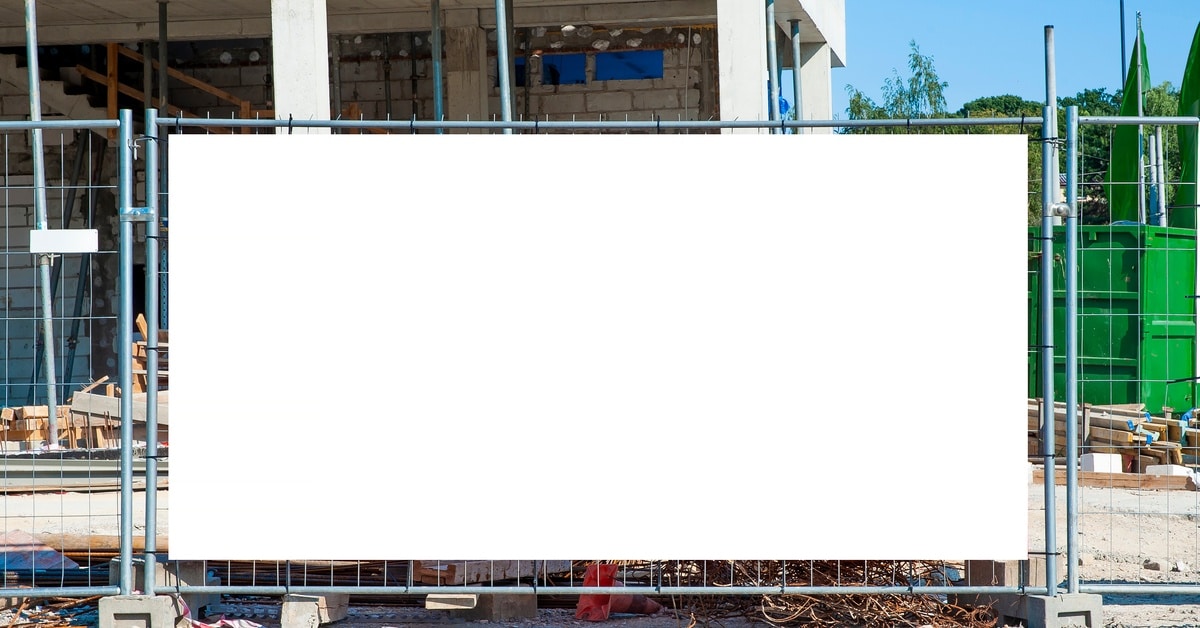
Your perimeter is prime real estate for branding and essential communication. Additionally, attaching safety signs (e.g., “Hard Hat Area,” “No Entry”) is often a legal requirement. While individual signs are light, a large corflute marketing banner acts similarly to shade cloth.
For small safety signs, standard cable ties or wire attachments are sufficient. For larger marketing banners, ensure they have wind slits cut into them to allow airflow. Always secure banners at multiple points (top, middle, and bottom) to evenly distribute tension across the mesh rather than relying on a single wire.
3. Acoustic Barriers (Sound Curtains)
In urban environments, managing noise pollution is critical for regulatory compliance and community relations. Acoustic barriers are heavy, dense mats hung from fencing to absorb sound. But because they are so weighty, it can be difficult for the temporary fencing to stay upright while keeping the material in place.
Standard temporary fencing feet may not suffice. You will likely need to upgrade to heavy-duty feet or double-block systems. Additionally, bracing stays are obligatory here. The structural integrity of the fence panel must be high-quality to prevent the top rail from bowing under its own weight.
4. Security Equipment
Remote sites often require cameras, lights, or perimeter-mounted motion sensors. Vibration and stability are vital to security needs, but don’t always work with temporary fencing. A shaking fence triggers false alarms or results in blurry footage.
Preventing these false alarms means taking countermeasures. Mount the equipment near the vertical posts rather than the center of the mesh panel. This provides a rigid anchor point. Ensure the cabling is tidy and secured to prevent snagging hazards.
Best Practices for Safe Attachment
To ensure your operations remain efficient and your site secure, follow these professional guidelines when modifying your temporary fencing setup.
Implement Bracing Stays
If you attach anything that increases wind load or vertical weight, you must reinforce the fence. A bracing stay is an angled pole attached to the fence panel and anchored to the ground (either with a heavy block or a ground pin).
Install a brace every three to four panels for standard setups, or every one or two panels if attaching heavy shade cloth or acoustic barriers in windy zones.
Use the Right Fasteners
Avoid makeshift solutions like scrap wire, which can rust or leave sharp edges. Instead, use proper fasteners, such as cable ties, suitable for lightweight signs and shade cloth. They are cheap, easy to install, and easy to remove.
Fence couplers/clamps are another option that works for connecting panels together. Ensure the nut faces inward (toward the site) to prevent tampering from the outside.
Conduct Regular Inspections
A set and forget mentality is a risk to your business operations. Environmental conditions change, wind gusts loosen fittings, and UV light degrades plastic ties. Schedule weekly perimeter walks to check:
- Are the feet sitting flat?
- Are the bracing stays secure?
- Is the shade cloth tearing or acting as a sail?
- Are the clamps tight?
Why Quality Hardware Matters for Scalability
For business managers, the decision to attach items to fencing often comes down to scalability and asset management. Investing in high-quality temporary fencing systems allows you to adapt to different project needs without constantly replacing damaged gear.
Cheap, lightweight panels may buckle under the weight of an acoustic barrier or bend during a storm if covered in shade cloth. High-quality, galvanized steel panels with reinforced corners offer the durability required to support add-ons.
Optimizing Your Site Perimeter
Attaching items to temporary fencing is a smart operational move when done correctly. It allows you to utilize your perimeter for marketing, safety compliance, and environmental control simultaneously.
Ensure your team understands the protocols to safely attach items to temporary fences. If you are unsure about the load-bearing capacity of your current setup, consult with your fencing specialist before installation. The cost of a bracing stay is minimal compared to the cost of a site shutdown due to a collapsed fence.
Rentafence.com supplies durable temporary fencing options for a variety of needs. Regardless of the event you’re planning, we offer everything you need to ensure safety and prevent unauthorized entry. From temporary construction panels to crowd control barricades, we are your one-stop shop for the best fencing options. Contact us today to request a quote.
Recent Comments