

A construction site is a hub of activity, but it also presents significant risks to workers and the public. To ensure safety and prevent accidents, the Occupational Safety and Health Administration (OSHA) has established clear standards for securing these sites. Construction fencing is a critical component of this safety protocol. Failing to comply with these regulations can lead to hefty fines and, most importantly, serious injuries.
Understanding and meeting OSHA standards for construction fencing will help you maintain a secure worksite, protect your team and the public, and ensure your project proceeds without costly interruptions. We will cover the specific regulations, the different types of compliant fencing, and how to install and maintain your perimeter properly.
OSHA’s Role in Construction Site Safety
OSHA is the main federal agency responsible for enforcing workplace safety and health standards in the United States. Its mission is to ensure safe working conditions for all employees by setting and enforcing standards and providing training, outreach, education, and assistance.
In the construction industry, OSHA regulations are particularly stringent due to the high risk of the work. These standards help mitigate common hazards, including falls, electrocutions, and injuries from moving equipment or falling objects. A secure perimeter, established with proper construction fencing, is the first line of defense in managing these risks.
Key OSHA Regulations for Fencing
While OSHA doesn’t have a single universal standard that mandates specific fences, its regulations collectively require a secure, safe worksite perimeter. The most relevant standards fall under several sections of the Code of Federal Regulations (CFR), primarily 29 CFR 1926, which covers safety and health regulations for construction.
1. General Safety and Health Provisions (29 CFR 1926.20)
This section mandates that employers must initiate and maintain programs necessary to comply with safety standards. Part of this responsibility includes identifying and mitigating hazards. A properly fenced perimeter is a fundamental aspect of hazard control, preventing unauthorized individuals from entering a dangerous environment.
2. Access Control and Hazard Communication (29 CFR 1926.200)
Clear signage is a crucial part of worksite safety. OSHA requires signs and symbols to warn of potential hazards. When it comes to fencing, this means:
- “Danger” signs: You must post these signs where immediate hazards exist. For a construction site, this could include areas with heavy machinery, open excavations, or electrical risks. Danger signs should also be at all points of entry and along the fence line.
- “Caution” signs: These warn against potential hazards or unsafe practices.
- Clear entry points: Gates and access points must be clearly marked and controllable to ensure only authorized personnel can enter.
3. Fall Protection (29 CFR 1926.501 and 1926.502)
Fall protection standards are critical. If your construction site includes unprotected sides or edges, such as excavations, pits, or elevated platforms, you must have a barrier in place. A sturdy construction fence can serve as part of this system, especially at ground level.
For excavations, OSHA 1926.651(j)(2) specifically requires that a barricade, fence, or other barrier must be present to keep people and equipment from falling into the trench. This barrier must be at least 42 inches high and capable of withstanding significant force.
Choosing the Right Construction Fencing
To meet OSHA standards, the fencing you choose must be suitable for your site’s specific conditions. Here are some compliant options:
Temporary Chain-Link Fencing
This is one of the most common and effective solutions for construction sites.
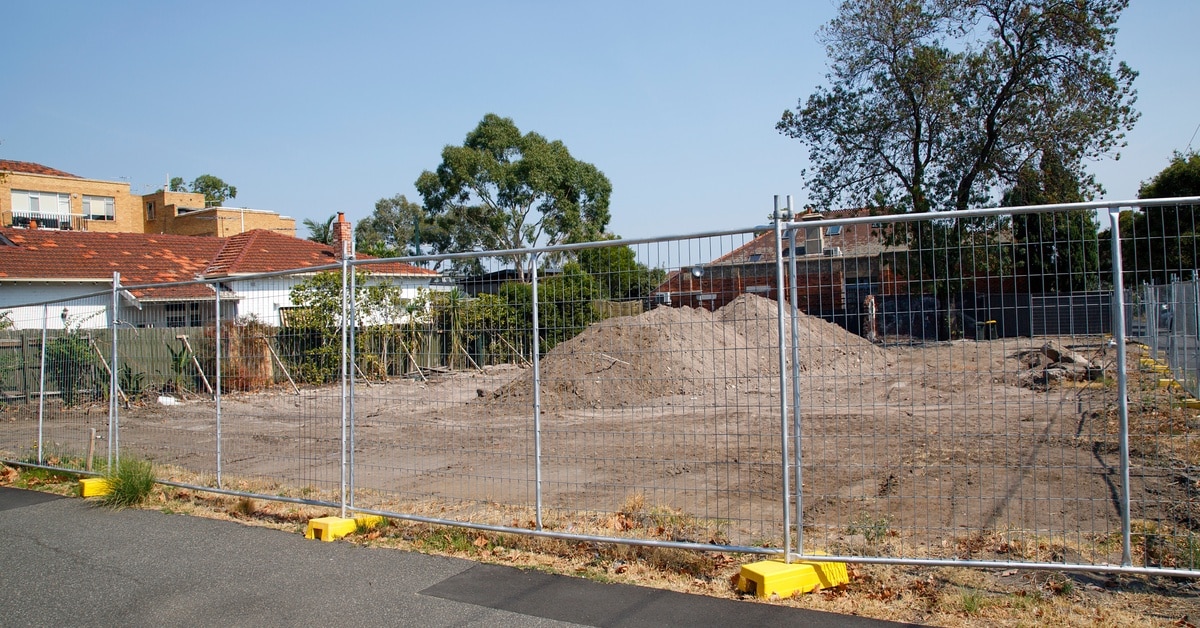
- Panel systems: Freestanding panels are versatile and easy to install or reconfigure as the project evolves. They are held up by weighted stands, making them ideal for temporary use on concrete or asphalt surfaces without drilling.
- Post-driven systems: For long-term projects or sites with soft ground (like soil or grass), posts driven into the ground offer superior stability and security.
- Height: To be effective, fences should typically be at least 6 feet high, although 8-foot options provide enhanced security and work better in urban environments.
Barricades and Barriers
In some situations, particularly for interior cordoning or short-term projects, plastic or concrete barriers may be sufficient.
- Plastic jersey barriers: These are lightweight, interlocking, and can be filled with water for stability. They are highly visible and effective for directing traffic and pedestrian flow away from work zones.
- Concrete barriers: For areas requiring heavy-duty protection, such as along active roadways, concrete barriers offer maximum impact resistance.

Windscreen and Privacy Screens
Adding a windscreen or privacy screen to your chain-link fence can offer additional benefits. It reduces the amount of dust and debris that leaves the site, provides privacy, and can minimize distractions for workers. However, you must ensure the fence and its anchoring system are strong enough to handle the increased wind load.
Best Practices for Installation and Maintenance
Proper installation is just as important as choosing the right type of fence.
- Ensure stability: All fencing must be securely anchored. For panel systems, use heavy-duty stands and sandbags to prevent tipping, especially in high-wind or uneven-ground areas. For post-driven fences, embed the posts deeply enough to provide a solid foundation.
- Inspect regularly: Your site superintendent or safety officer should conduct regular inspections of the entire fence line. Look for damage, gaps, or areas where the fence’s integrity has been compromised. Make repairs immediately.
- Secure all gates: Your team should lock all access gates when no one is on the site. During work hours, team members should monitor them to prevent unauthorized entry.
- Install proper signage: Post clear, visible warning signs at regular intervals along the fence. This should include “Danger,” “Hard Hat Area,” and “Authorized Personnel Only” signs as appropriate.
- Maintain a clear perimeter: Keep the area immediately inside and outside the fence line clear of debris, materials, and equipment. This ensures the fence is visible and prevents it from being used as a ladder or support for other objects.
Secure Your Site With Confidence
Meeting OSHA standards for construction fencing isn’t just about avoiding fines—it’s about creating a fundamentally safe environment for your workers and the public. A secure, well-maintained perimeter is a nonnegotiable aspect of any professional construction project.
If you need assistance selecting and installing OSHA-compliant fencing for your construction site, Rentafence.com is here to help. We provide a range of high-quality construction fence rentals that ensure your site is secure from day one. Contact us today for a consultation and quote.
Recent Comments